
Shopping Cart
There are no more items in your cart
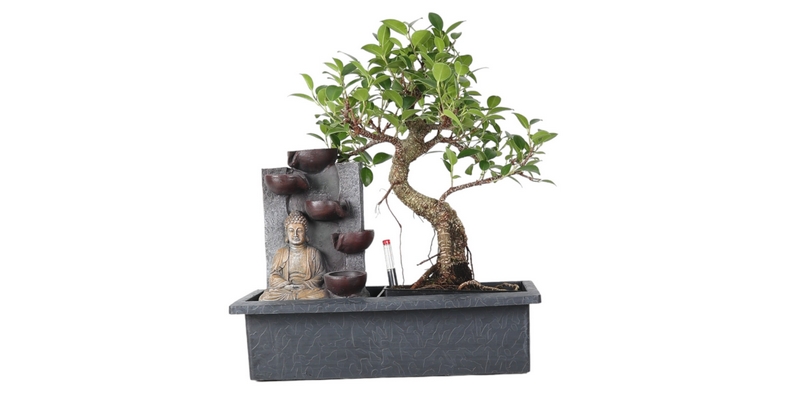
The "Easy Care System" is an automatic watering system that works through a "reservoir+pot" and a "level gauge" specifically developed for the concept, allowing a minimum autonomy of about 1 week (depending on the species and time of year).
The "Easy Care System" includes a submersible pump that circulates water through the waterfall, creating a pleasant image and a relaxing sound.
Besides its original and appealing aesthetics, with a strong connection to the East, the "Easy Care System" facilitates maintenance at the customer's home and even in the store, allowing one to have a bonsai in an area where watering is not easy, or even in a weekend house.
The Bonsai in the "Easy Care System" are previously cultivated in the proper pots so that the capillary roots reach the reservoir's absorption zone, ensuring water uptake while keeping the "root ball" protected from excess water and allowing it to “breathe”.
The reservoir should be filled with water, watering through the Bonsai's soil until it becomes moist, until the "level gauge" indicates the maximum, so that only the absorption roots touch the water and the entire root ball is not submerged. Always ensure that the gauge's float is free and floating.
Between waterings, we should allow the soil surface layer to appear slightly dry in order to avoid excess water.
For the application of fertilizers and fortifiers (Fertil Bonsai Humic, Bio Bonsai Activ, etc), we suggest removing the pot from the reservoir and watering the soil with the product to be applied, then allowing the bonsai to drain for a few minutes so that fertilizer residues do not remain in the reservoir releasing odor.
When transplanting into the "Easy Care System", for at least 3 to 4 months (depending on the species), the Bonsai should be watered normally without using the system as the watering method. Only after ensuring that capillary roots exist in the reservoir's absorption zone can automatic watering be resumed.
The specific maintenance care for the species cultivated in the "Easy Care System" should be respected and can be consulted in our species-specific technical sheets available online.
