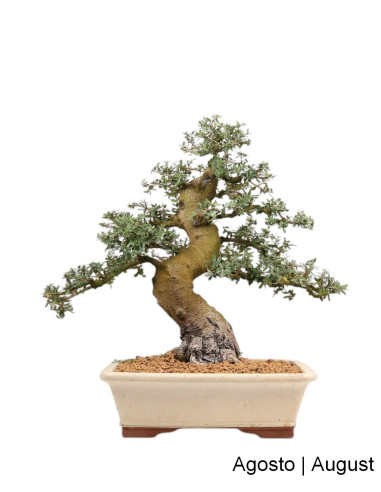
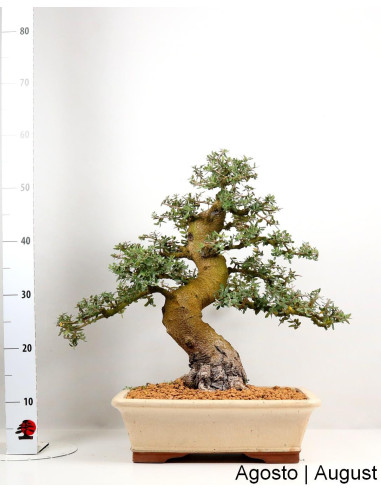
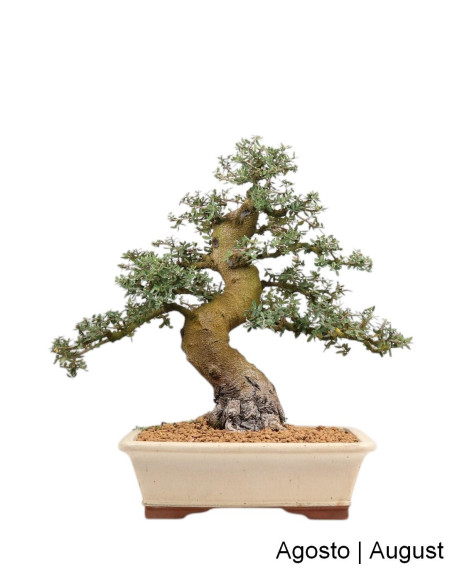
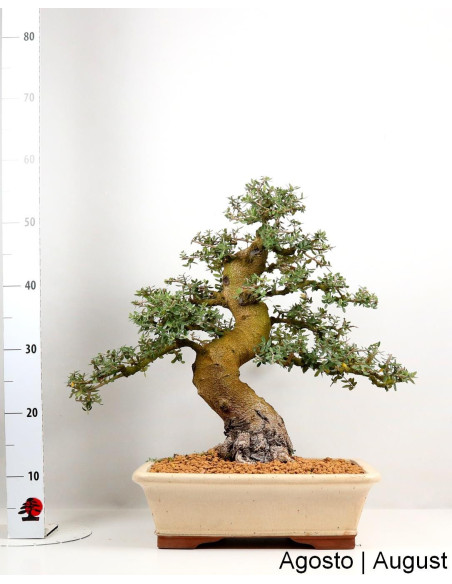
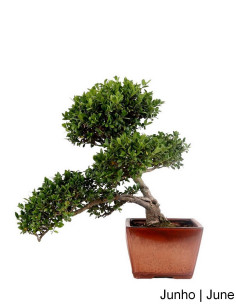
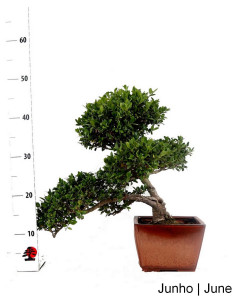
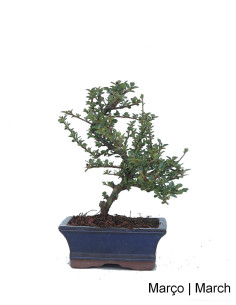
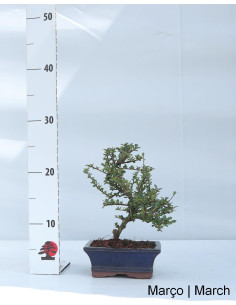
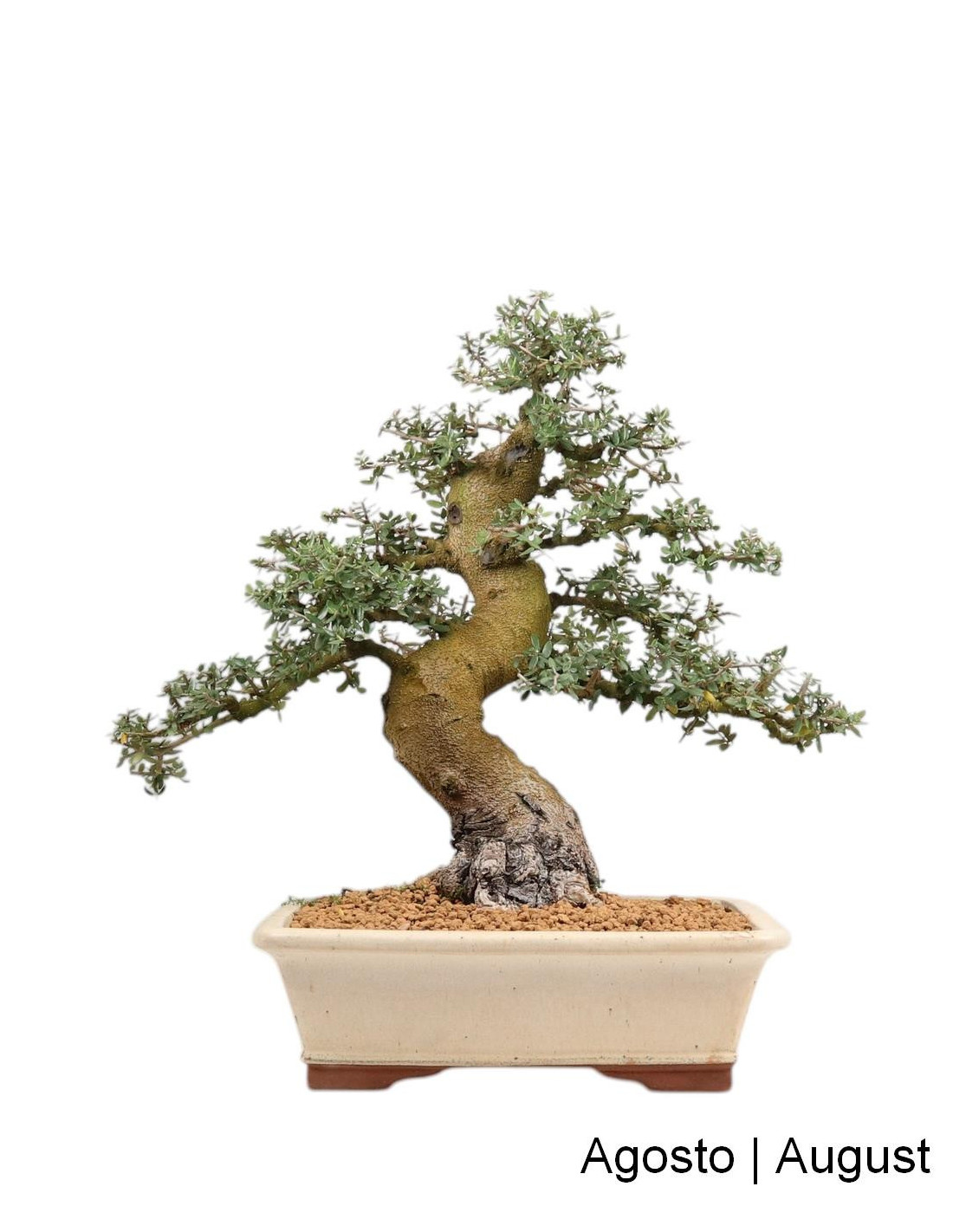
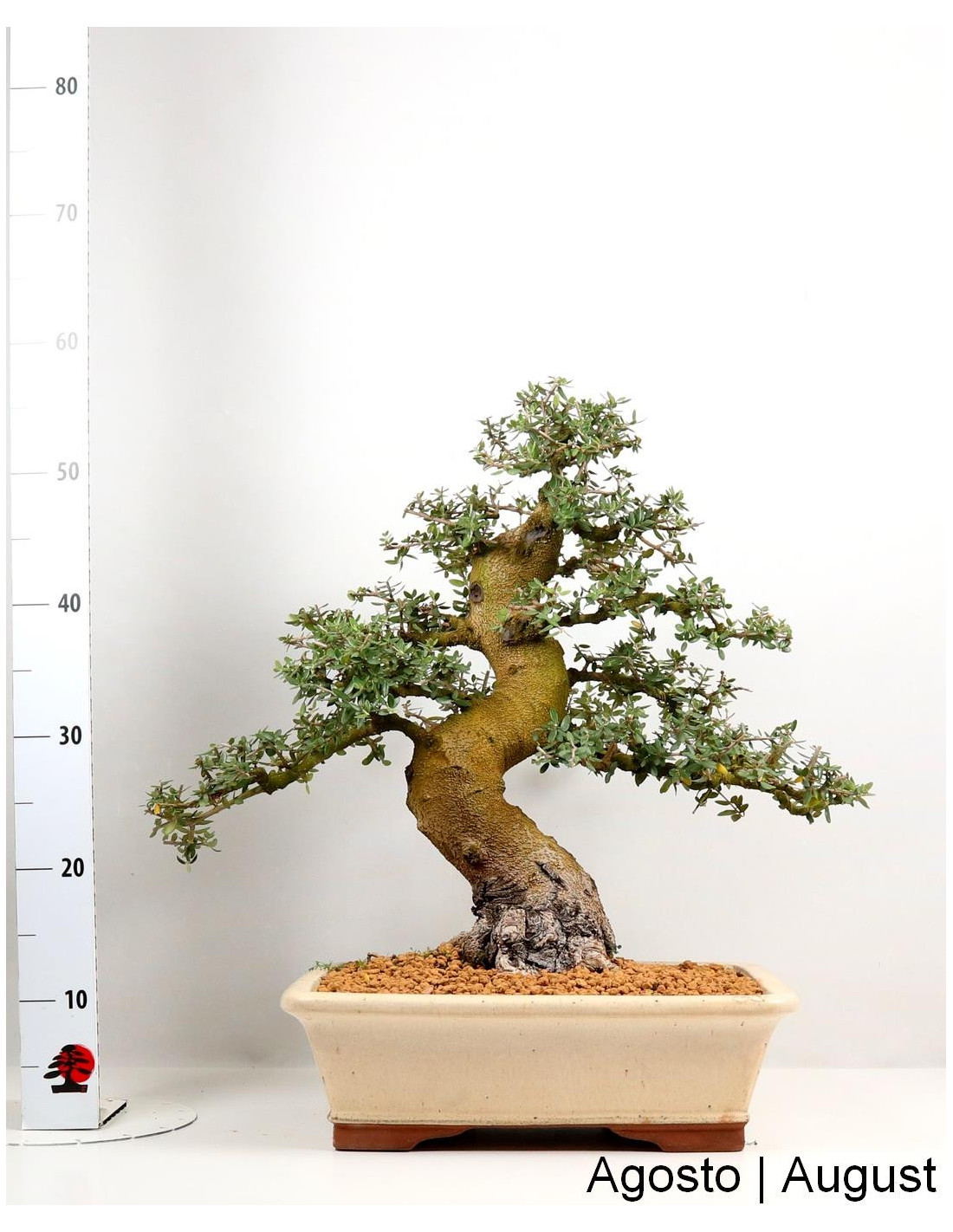
Common Name: Olive Tree
Scientific Name: Olea europea
Characterization: Originating from the Mediterranean region (Portugal/ Greece/Spain/Italy), it belongs to the Oleaceae family.
A medium-sized tree with slow growth, evergreen, and oval-shaped leaves with green-gray tones.
There is a wild variety, the Wild Olea, also highly appreciated in Bonsai for its small leaf size and rigid trunk that allows making Jin and Shari (deadwood); this variety does not bear fruit.
Location: Outdoors, where it receives 2 to 3 hours of direct sunlight per day (ideally in the morning or late afternoon), protected from strong winds and frost.
Watering: Water the soil abundantly until a lot of water comes out of the drainage holes, to evenly moisten the soil, always from above, never by immersion, using a watering can with fine nozzles.
Tips on watering, see the watering technical sheet.
Allow the top layer of soil to dry slightly between waterings (to check if the plant needs water, touch the soil with your fingers).
If you have a tray under the Bonsai, never leave any water in it (to prevent root rot).
There is no advantage to misting the leaves; only do so on days when you fertilize and if the fertilizer is for foliar application, but ensure the leaves are dry by nightfall to avoid fungi.
Nutrition: From February to October, with a basic plan consisting of a complete fertilizer (Fertil Bonsai Humic, or Green & Gold Bonsai Organic or Biogold), and a biostimulant (Bio Bonsai Activ), which can also be combined with other products from our range.
Detailed information on how to combine these products with others from our range, or for a more specific nutrition plan, see the complete nutrition plan technical sheet.
Pruning: Pruning should be done by allowing the plant to grow 5 to 6 pairs of leaves, then cutting it back to the original shape. Unfortunately, this method usually removes the flower buds.
After winter, we can perform a formative pruning and allow the branches to expand a bit to encourage flowering before cutting above the flowers.
Tips on pruning, see the pruning and defoliation technical sheet.
Repotting: Using Leafy Bonsai Soil in February. We should prune heavily and partially defoliate if necessary.
Details about repotting, post-repotting care, and specific fortifiers you can use are available in the repotting technical sheet.
Wiring: Can be done throughout the year.
Guidance on wiring is available in the wiring technical sheet.