Shopping Cart
There are no more items in your cart
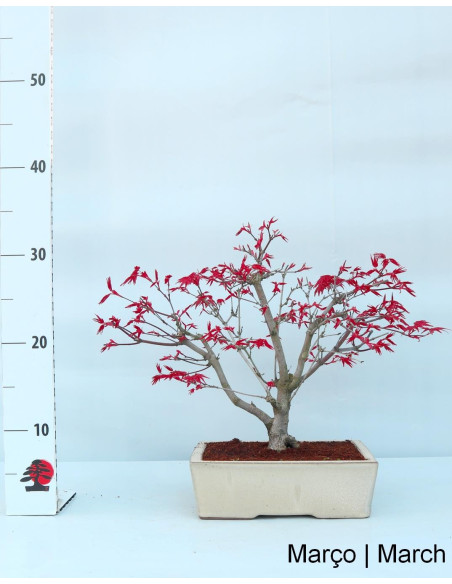
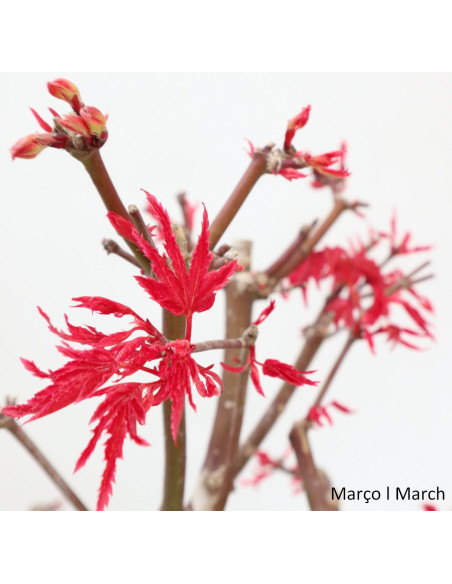


- -5%

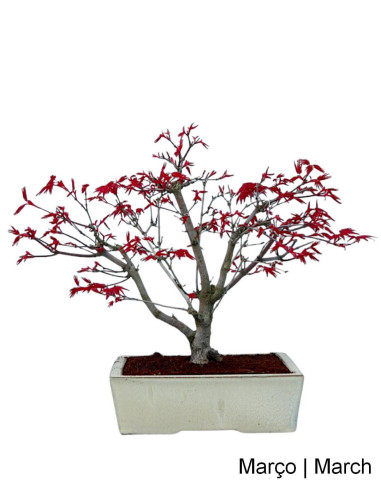
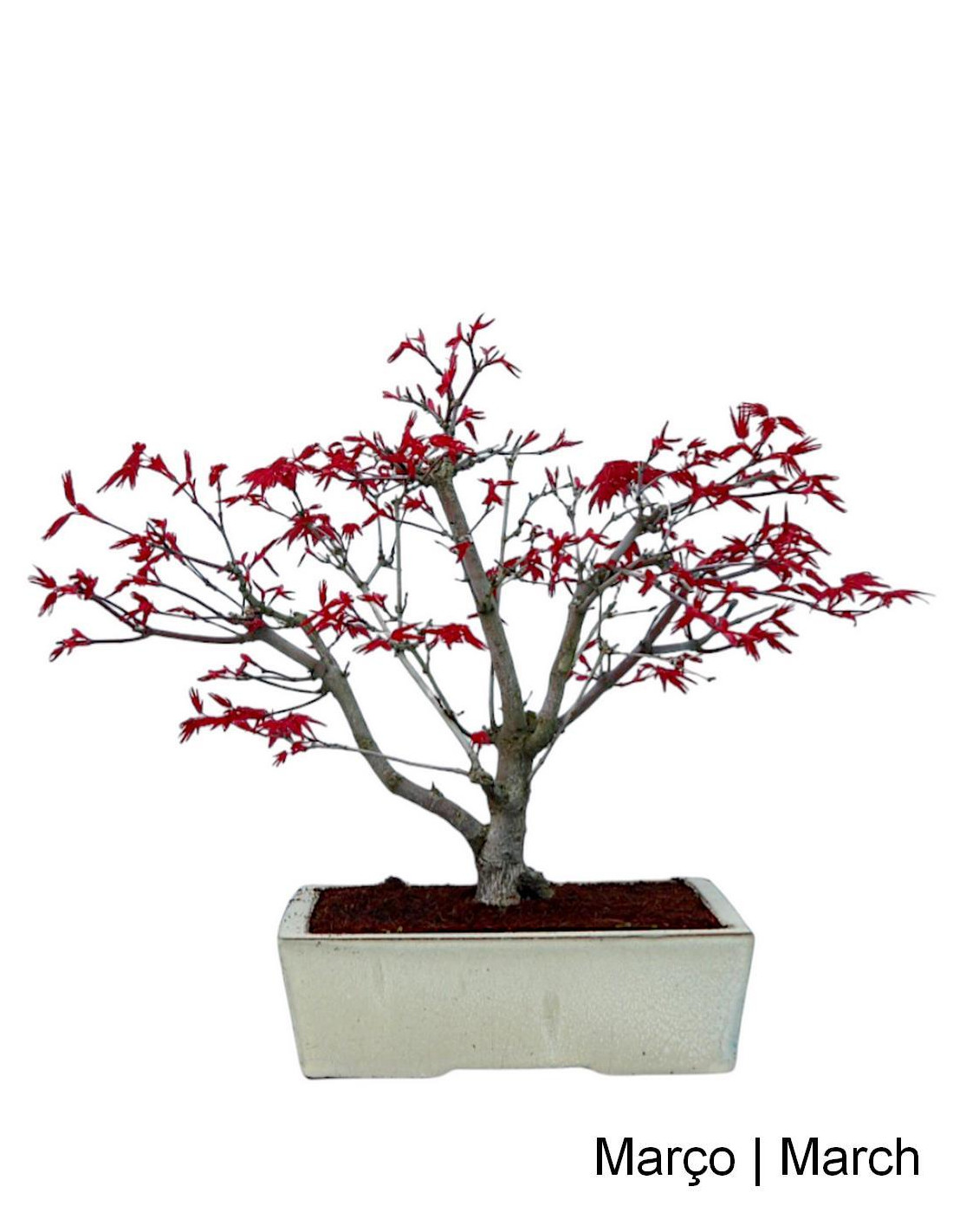
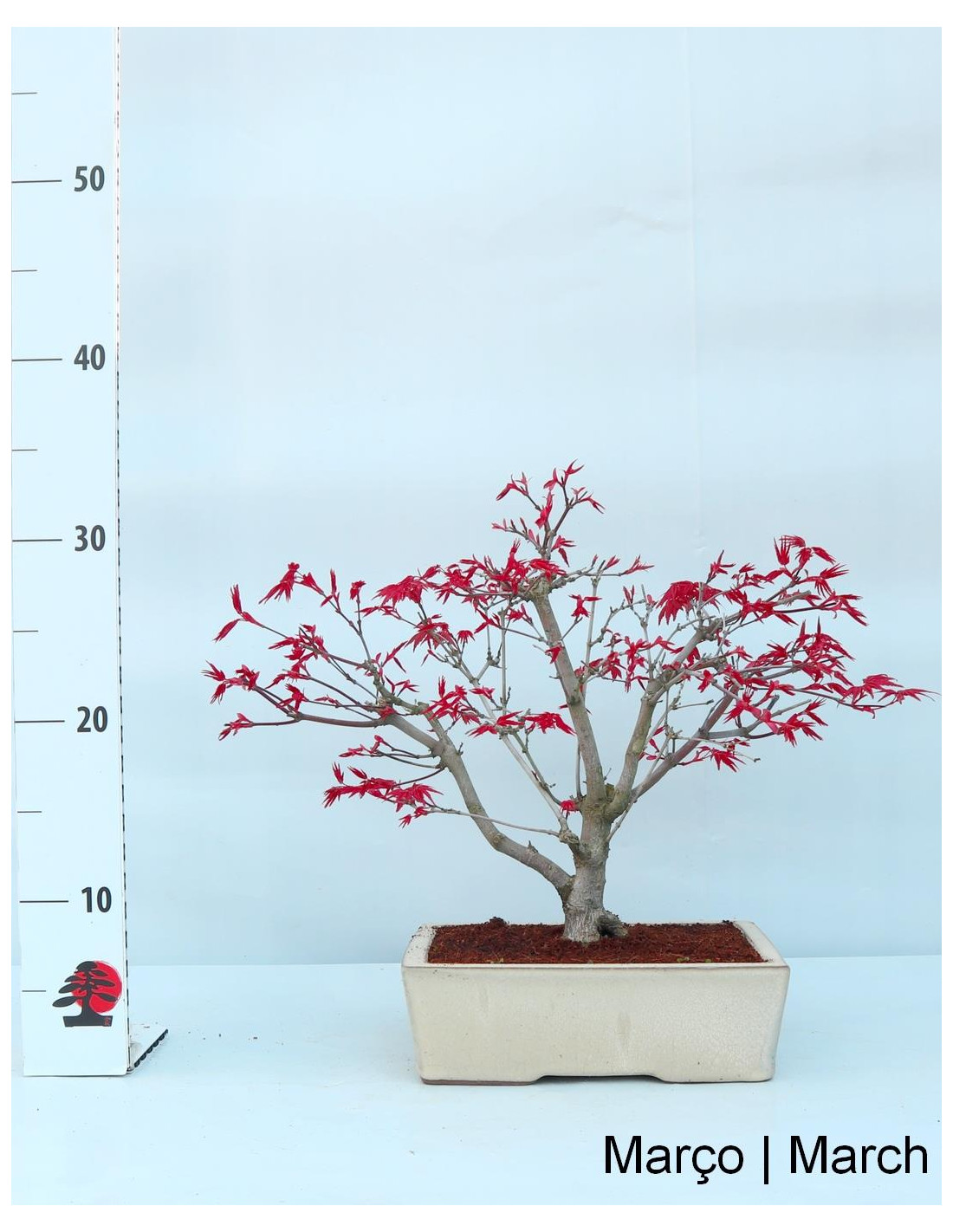
Species of the Aceraceae family, originating from Japan.
It is a deciduous tree, with five lobes (palmatum), perhaps the most well-known and appreciated deciduous tree in Bonsai.
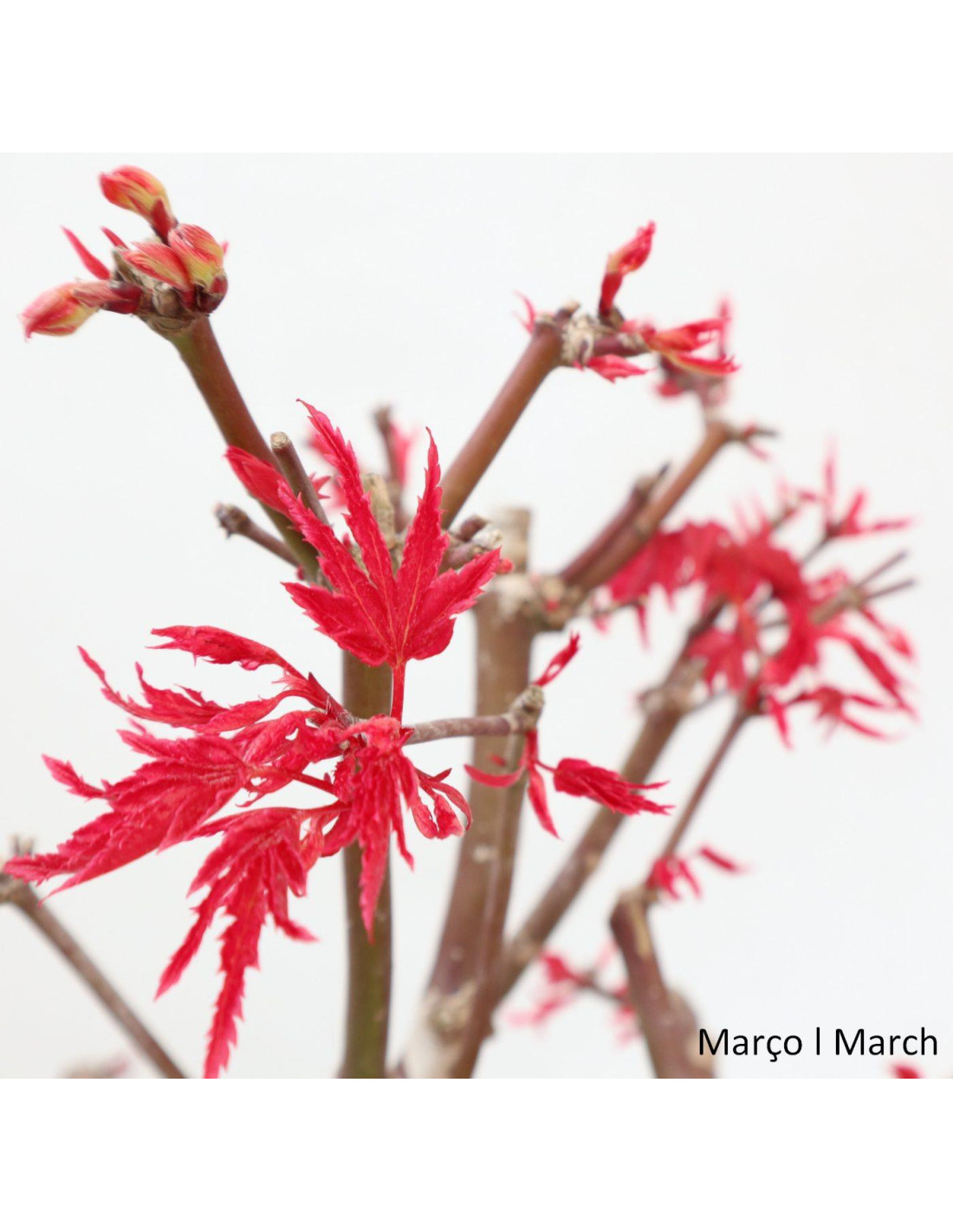
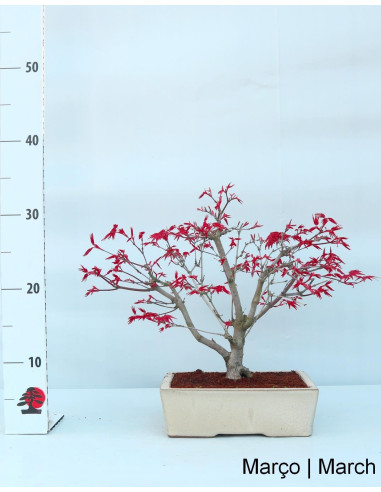
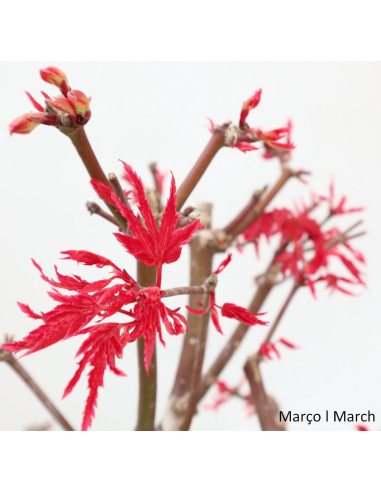
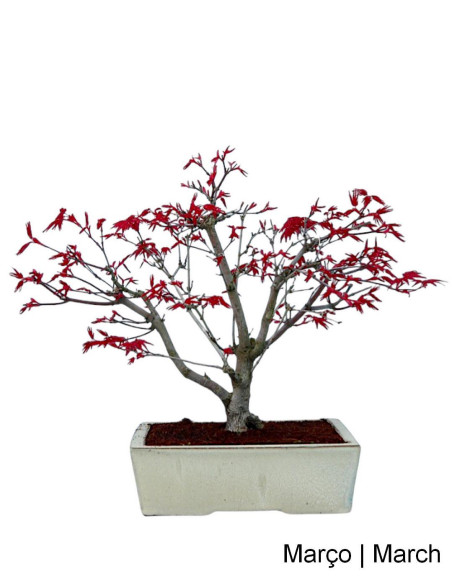
The Deshojo variety is highly valued for its strong red tone at budding and after defoliation, and for the magnificent autumn coloration, which goes through different shades of yellow/orange/red.
The Acer Palmatum Deshojo Bonsai is an outdoor plant.
Scientific Name: Acer Palmatum
Characterization: Member of the Aceraceae family, originating from Japan.
Deciduous tree, with five lobes (palmatum), it is perhaps the most well-known and appreciated deciduous tree in Bonsai.
There are many varieties used for Bonsai, with the most diverse colors and leaf sizes. The most well-known and appreciated is the "Deshojo," for its red tone when budding, which turns green in the summer and returns to red tones when the leaf falls.
Also, the "Yatsubusa" varieties (Palmatum Kashima or Kihoime) are highly appreciated for the small size of their leaves and short internodes, which make very compact plants. They are usually produced in the Hokidashi style (round crown) because they do not have apical dominance, thus their energy is more balanced.
Location: Outdoors, where it receives 2 to 3 hours of direct sunlight per day (ideally in the morning or late afternoon), protected from strong winds and frost.
It is very resistant, but it is common in mid-summer for the leaves to appear sunburned, so they should be protected from the strong midday sun throughout almost the entire summer season.
Watering: Water the soil abundantly until a lot of water comes out of the drainage holes, in order to moisten the soil evenly, always from above and never by immersion, using a watering can with fine nozzles.
Tips about watering, consult the watering technical sheet.
Allow the surface layer of soil to dry slightly between each watering (to check if the plant needs water, touch the soil with your fingers), but be careful as water consumption increases greatly in spring when there is a lot of new foliage.
If you have a tray under the Bonsai, never leave any water in it (to prevent the roots from rotting).
There is no benefit in misting the leaves; only do this on days when you fertilize and if the fertilizer is for foliar application, but make sure the leaves dry by night to avoid fungi.
Nutrition: From February to September/October, with a basic plan composed of a complete fertilizer (Fertil Bonsai Humic, or Green & Gold Bonsai Organic or Biogold), and a biostimulant (Bio Bonsai Activ), which can also be combined with other products from our range.
Detailed information on how to combine these products with others in our range, or for a more specific nutrition plan, consult the complete nutrition plan technical sheet.
Pruning: The leaves tend to grow and the internodes become long in some species. Usually, growth must be controlled at the beginning of budding with "Metsumi".
In summer, if healthy, they can be defoliated to produce new leaf buds, which besides being smaller, will have better autumn coloration.
Tips about pruning, consult the pruning and defoliation technical sheet.
Transplanting: With Terra Bonsai Folhosas in February/March, before budding starts.
Details about transplanting, post-transplant care, and specific fortifiers you can use, consult the transplanting technical sheet.
Wiring: Usually at the end of winter before budding, or in summer with total defoliation.
Guidance on wiring, consult the wiring technical sheet.