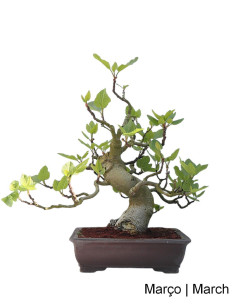
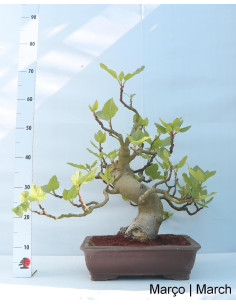
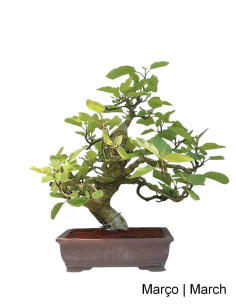
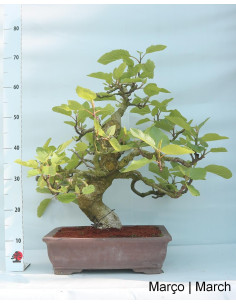
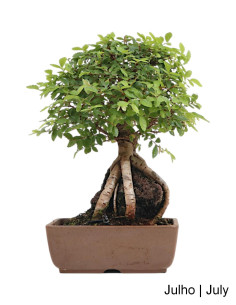
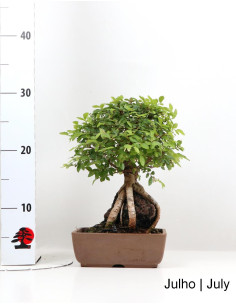
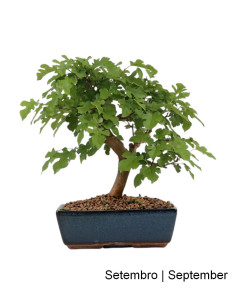
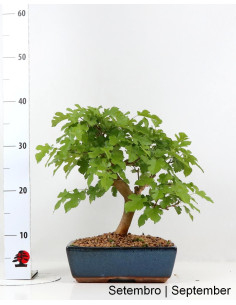
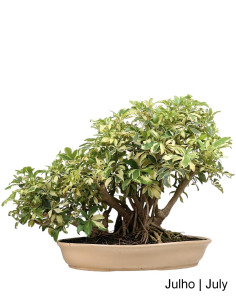
Common Name: Pomegranate Tree
Scientific Name: Punica Granatum
Characterization: Belongs to the Punicaceae family and originates from the Mediterranean.
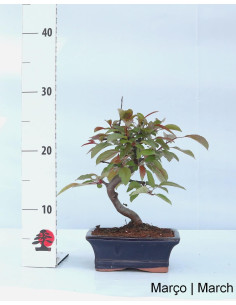
The "Nana" variety is widely used in Bonsai, has deciduous leaves and blooms abundantly from Spring, producing fruit in late Summer.
The Punica Granatum Nejikan is a Japanese variety, highly appreciated not only for its twisted trunk but also for its large fruits.
Location: It should live outdoors all year, where it receives 2 to 3 hours of direct sunlight per day (ideally in the morning or late afternoon), protected from strong winds and frost. It likes sunny exposures but should be protected from strong sun at the peak of Summer to avoid losing the fruits.
Watering: Water the soil abundantly until a lot of water drains out to evenly moisten the soil, always from above, never by immersion, using a watering can with fine holes.
Tips about watering, see the watering technical sheet.
Let the surface layer of the soil dry between each watering (to check if the plant needs water, touch the soil with your fingers), it has a moderate water consumption.
If you have a dish under the Bonsai, never leave any water in it (to avoid root rot).
There is no advantage in spraying the leaves; only do it on days when you fertilize and if the fertilizer is specific for foliar application, but ensure the leaves dry by nightfall to avoid fungi.
Nutrition: From February to September, with a base plan composed of a complete fertilizer (Fertil Bonsai Humic, or Green & Gold Bonsai Organic or Biogold), and a biostimulant (Bio Bonsai Activ), which can also be combined with other products from our range.
Detailed information on how to combine these products with others from our range, or for a more specific nutrition plan, consult the complete nutrition plan technical sheet.
Pruning: Prune to keep the shape as "short" as possible during Spring. This way we will get flowers and fruits "close to the crown". When we start to see flowers, we should avoid cutting them.
Pruning tips, see the pruning and defoliation technical sheet.
Repotting: With Leafy Bonsai Soil in February, before bud break starts.
Details about repotting, post-repotting care, and specific fortifiers you can use, consult the repotting technical sheet.
Wiring: Can be wired in late Autumn or Winter, always after leaf fall.
Instructions about wiring, see the wiring technical sheet.