Shopping Cart
There are no more items in your cart


- -5%
- New

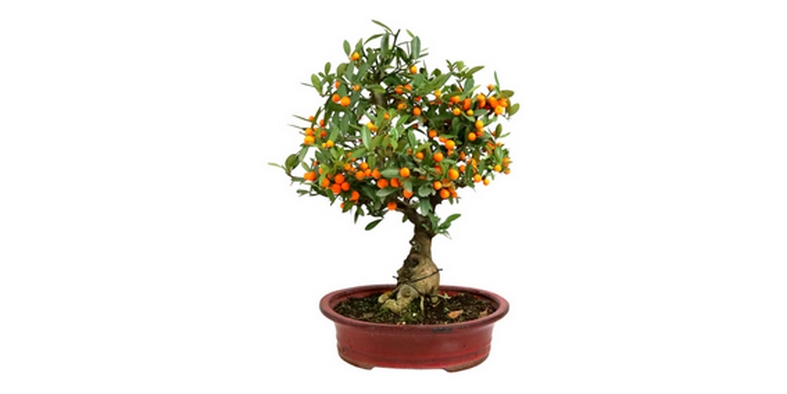
Common Name: : Citrus Kinzu
Scientific Name: Citrus Kinzu
Description: Originating from Asia, it belongs to the Rutaceae family, highly valued in Bonsai and as an ornamental plant for its abundance of flowers and fruits, and their small size.
It has evergreen leaves, oval but elongated about 3 cm long by 1 cm wide, dark green in color, its growth is slow and great care must be taken when handling the plant, as it produces very strong thorns.
Location: In Mediterranean and mild climates, it should live outdoors all year round as long as protected from strong winds and frost, requiring at least 2 to 3 hours of direct sunlight, it should be rotated 180° weekly.
In areas with harsher winters, it is advisable to protect it during the coldest months, in an indoor area but without any type of climate control (e.g., a sunroom), placed near a window well exposed to the sun with a minimum of 2 to 3 hours, it should be rotated 180° weekly.
Watering: Water the soil abundantly until plenty of water runs out through the drainage holes, to evenly moisten the soil, always from above and never by immersion, using a watering can with fine holes.
For watering tips, consult the watering technical sheet.
Let the top layer of the soil dry slightly between waterings (to check if the plant needs water, touch the soil with your fingers).
If there is a tray under the Bonsai, never leave any water in it (to avoid root rot).
There is no benefit to misting the leaves, only do so on days when fertilizing and if the fertilizer is for foliar application, but ensure that the leaves dry by nightfall to avoid fungi.
Nutrition: From February to October/November, following a basic plan consisting of a complete fertilizer (Fertil Bonsai Humic, or Green & Gold Bonsai Organic or Biogold), and a biostimulant throughout the year (Bio Bonsai Activ), which can also be combined with other products from our range.
Detailed information on how to combine these products with others from our range, or for a more specific nutrition plan, consult the complete nutrition plan technical sheet.
Pruning: Allow 6 to 8 leaves to grow, then cut back to the first leaves.
For pruning tips, consult the pruning and defoliation technical sheet.
Repotting: Using Broadleaf Bonsai Soil in February/March, with strong partial defoliation.
Details about repotting, post-repotting care, and specific strengthening products you can use, consult the repotting technical sheet.
Wiring: Can be wired all year round.
For wiring instructions, consult the wiring technical sheet.


