Shopping Cart
There are no more items in your cart


- -5%

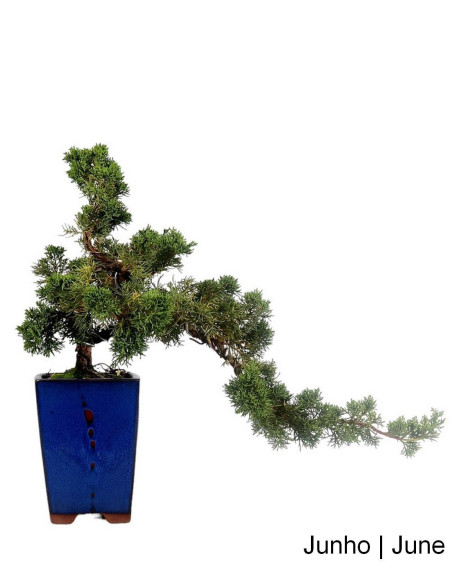
Species originating from Asia, belonging to the Cupressaceae family.
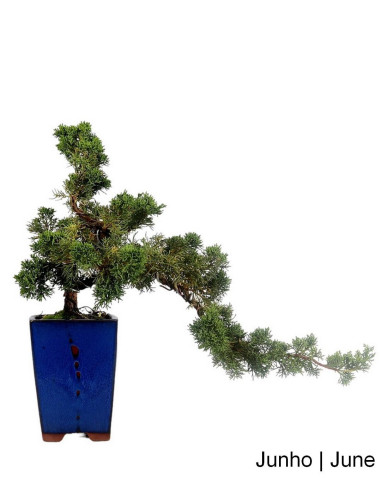
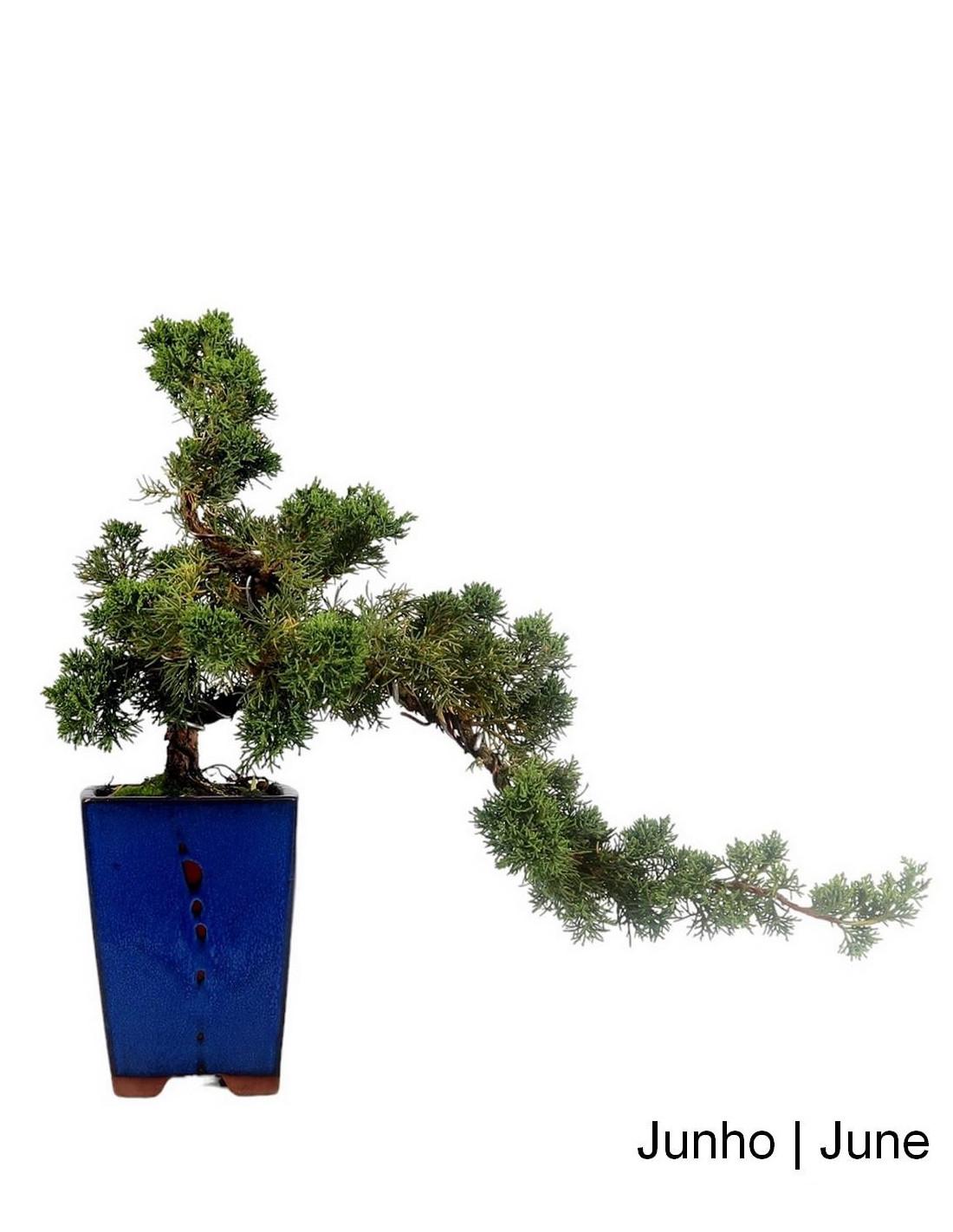
The Bonsai Juniperus chinensis is an evergreen conifer, highly appreciated for its fine and aromatic foliage, as well as for its resilience and great shaping ability.
Ideal for beginners and enthusiasts, it stands out for its robust and elegant appearance, with Juniperus being one of the most popular species in bonsai cultivation.
The Juniperus chinensis Bonsai is an outdoor plant.
Common Name: Juniperus
Scientific Name: Juniperus Chinensis
Description: Originating from China and Japan, it belongs to the Cupressaceae family.
Although practically all species can be transformed into Bonsai, most cannot "compact" after training pruning.
The best for Bonsai are the Japanese varieties, "Juniperus Sargentii" highly appreciated for its lush green, and "Juniperus Itoigawa" for the hardness of its wood to make deadwood (Jin and Shari).
Also highly appreciated is Juniperus Sabina, which is quite common in the Iberian Peninsula.
Juniperus Rigida, with similar maintenance care, is also quite admired because its leaves are needles instead of "scales," and due to this characteristic they compact easily responding well to severe pruning. Its downside is that it "pricks" the fingers a lot when handling it.
Location: Outdoors, where it receives 3 to 4 hours of direct sunlight per day (ideally in the morning or late afternoon), protected from strong winds and frost. It is very resistant to both cold and heat.
Watering: Water the soil abundantly until plenty of water flows out of the drainage holes, to evenly moisten the soil, always from above never by immersion, using a watering can with fine holes.
Tips about watering, see the watering technical sheet watering.
Allow the surface layer of the soil to dry slightly between each watering (to confirm if the plant needs water, touch the soil with your fingers).
If there is a tray under the Bonsai, never leave any water in it (to prevent root rot).
It has a high water consumption, especially in summer, and likes to be misted on its leaves during watering, which helps prevent the appearance of red spider mites, but it should be dry at night to avoid fungi.
Nutrition: From February to October/November, with a basic plan consisting of a complete fertilizer (Fertil Bonsai Humic, or Green & Gold Bonsai Organic or Biogold), and a biostimulant (Bio Bonsai Activ), which can also be combined with other products from our range.
Detailed information on how to combine these products with others from our range, or for a more specific nutrition plan, please consult the complete nutrition plan technical sheet.
Pruning: Its leaves are scales and should be maintenance pruned by pinching them with your fingers; if scissors are used, the cut areas dry out.
Training pruning should be done using scissors and pliers, always trying to cut in a way that replaces with a new scale shoot.
Maintenance pruning is done all year round, while training pruning is usually done post-winter or post-summer, so that there is still autumn growth to compact the plant.
Most varieties tend not to compact after training pruning; this is due to the plant's natural defense mechanism which, when heavily pruned for a while, stops producing scales and starts producing needles (in nature this mechanism causes plants or parts of the plant that are heavily grazed to be temporarily protected as animals get pricked).
This defense process prevents a good aesthetic result for many varieties because we can never have nice scales close to the branches; only when we let them "grow away" from the crown do they stop producing needles and return to scales, but by then the Bonsai design is lost.
Tips about pruning, see the pruning and defoliation technical sheet.
Repotting: With Conifer Bonsai Soil in February/March, when budding begins.
For specimens in small pots or grown in very hot areas, a solution to maintain soil hydration given the high water consumption in summer months is to make a mix with 50% Conifer Bonsai Soil, plus 50% of Deciduous Bonsai Soil or Akadama.
Details about repotting, post-repotting care, and specific fortifiers you can use can be found in the repotting technical sheet.
Wiring: Ideally from late winter to early spring, but it can be done all year round. Usually, we take the opportunity to do a cleaning pruning at the same time.
Instructions about wiring, see the wiring technical sheet.