Shopping Cart
There are no more items in your cart


- -5%

Species belonging to the Rosaceae family, originates from Asia.
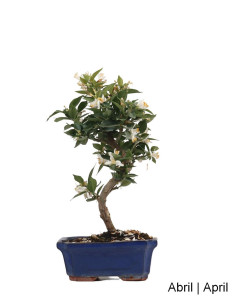
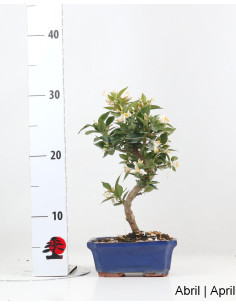
Bonsai with vigorous growth, evergreen leaves, highly appreciated for its abundant white flowering, followed by fruits that range from yellow to red, has green leaves and spines in the leaf axils.
The Pyracantha Bonsai is an outdoor plant.
Common Name: Pyracantha
Scientific Name: Pyracantha spp.
Characteristics: Belonging to the Rosaceae family, it originates from Asia.
A vigorously growing shrub with persistent leaves, highly appreciated for its abundant white flowering, followed by fruits that range from yellow to red.
Location: It is very resistant to both cold and heat, so it should remain outdoors well exposed to the sun all year round, where it receives 2 to 3 hours of direct sunlight per day (ideally in the morning or late afternoon), protected from strong winds and frost.
Watering: Water the soil abundantly until plenty of water comes out of the drainage holes, in order to moisten the soil evenly, always from above never by immersion, using a watering can with fine holes.
Tips about watering can be found in the watering technical sheet.
Let the surface layer of soil dry between each watering (to confirm if the plant needs water, touch the soil with your fingers). It tolerates drought well but has a high water consumption, especially when in flower or fruit.
If you have a dish under the Bonsai, never leave any water in it (to prevent the roots from rotting).
There is no advantage in spraying the leaves; only do so on days when you fertilize and if the fertilizer is specific for foliar application, but make sure the leaves dry by night to avoid fungi.
Nutrition: From February to October/November, follow a basic plan consisting of a complete fertilizer (Fertil Bonsai Humic, or Green & Gold Bonsai Organic or Biogold), and a biostimulant (Bio Bonsai Activ), which can also be combined with other products from our range.
Detailed information on how to combine these products with others in our range, or for a more specific nutrition plan, consult the complete nutrition plan technical sheet.
Pruning: Special care should be taken with the thorns it has. Although it grows slowly, it produces a very dense tangle of branches. Usually, we take advantage of the end of winter, after the fruit falls, to give it a cleaning pruning and reduce the crown.
New shoots produced during the growth phase should be allowed to grow 5 to 6 leaves and then pruned at the first leaf.
Tips on pruning can be found in the pruning and defoliation technical sheet.
Transplanting: Using Terra Bonsai Folhosas in February, performing a strong pruning and/or partial defoliation.
Details about transplanting, post-transplant care, and specific fortifiers you can use can be found in the transplant technical sheet.
Wiring: It is usually shaped by pruning, but it responds well and can be done all year round.
Instructions on wiring can be found in the wiring technical sheet.