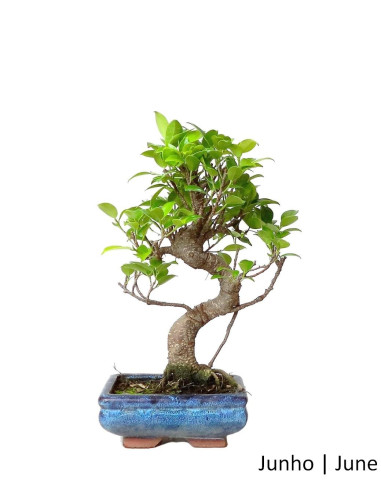
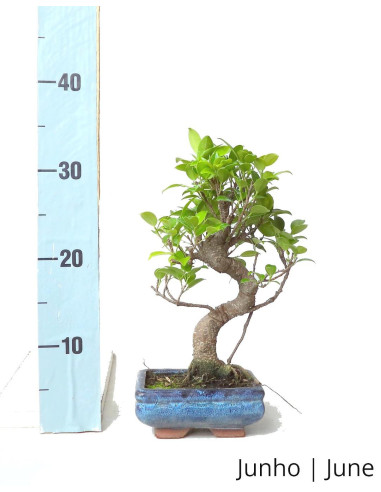
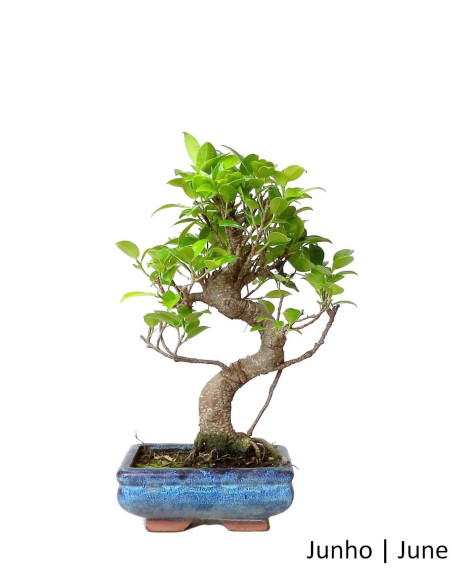
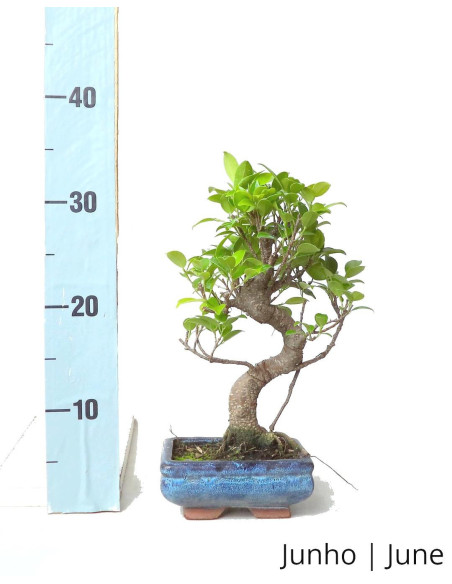
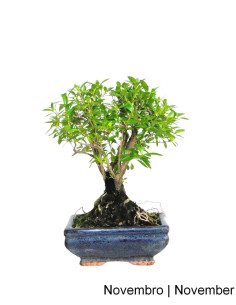
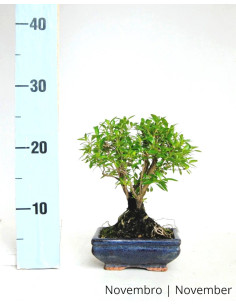
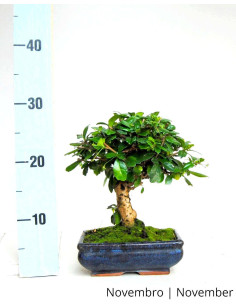
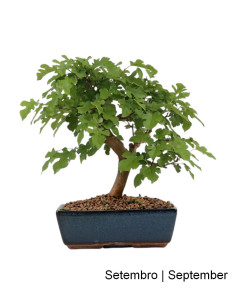
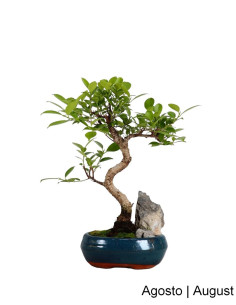
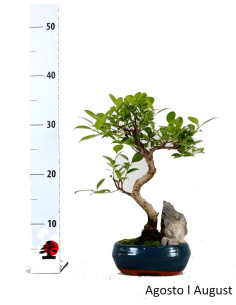
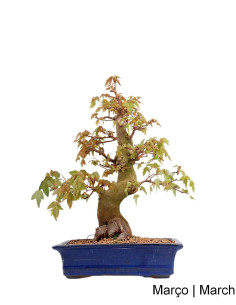
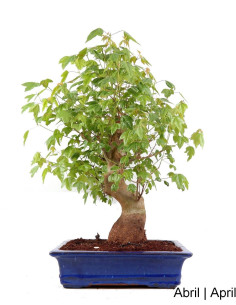
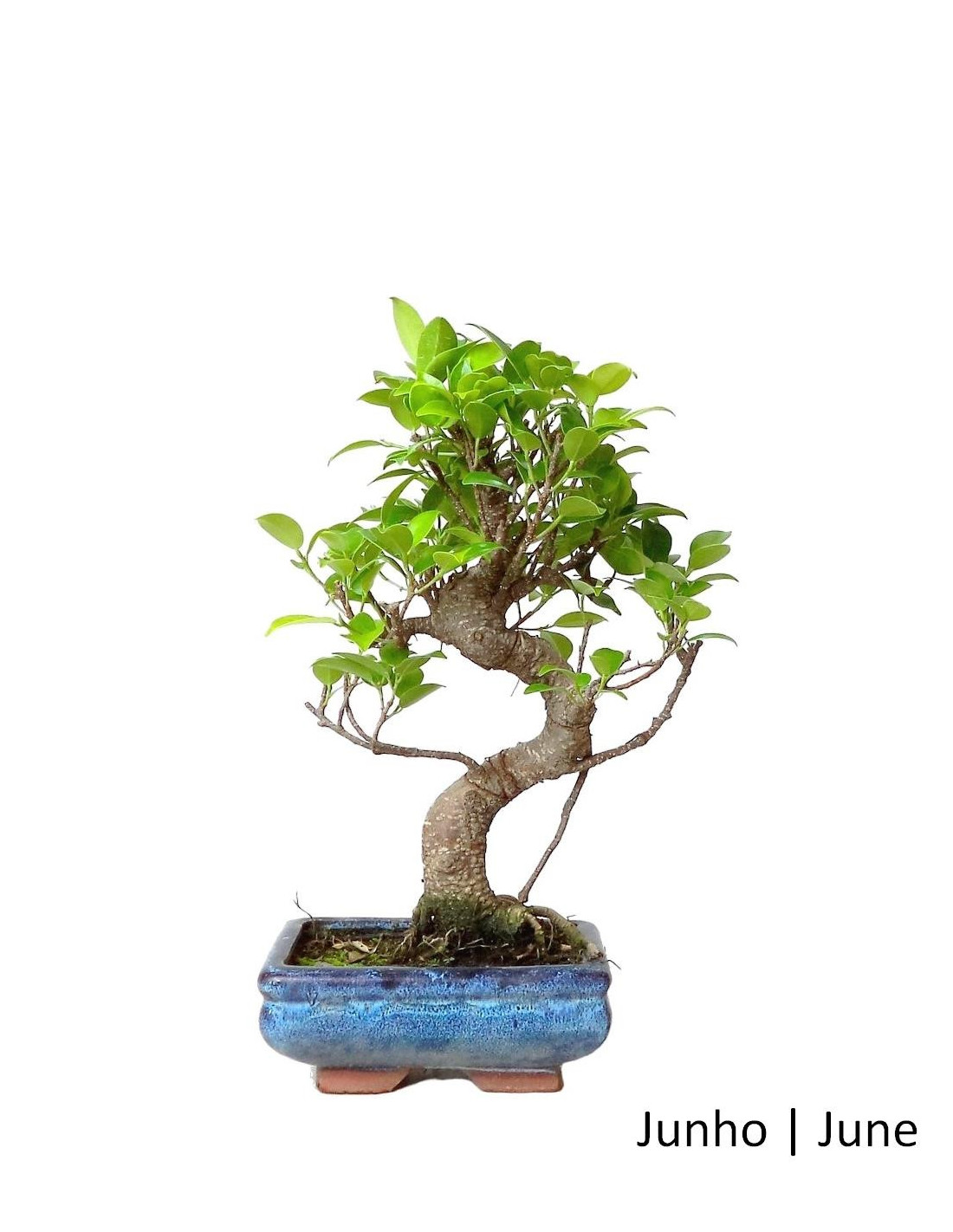
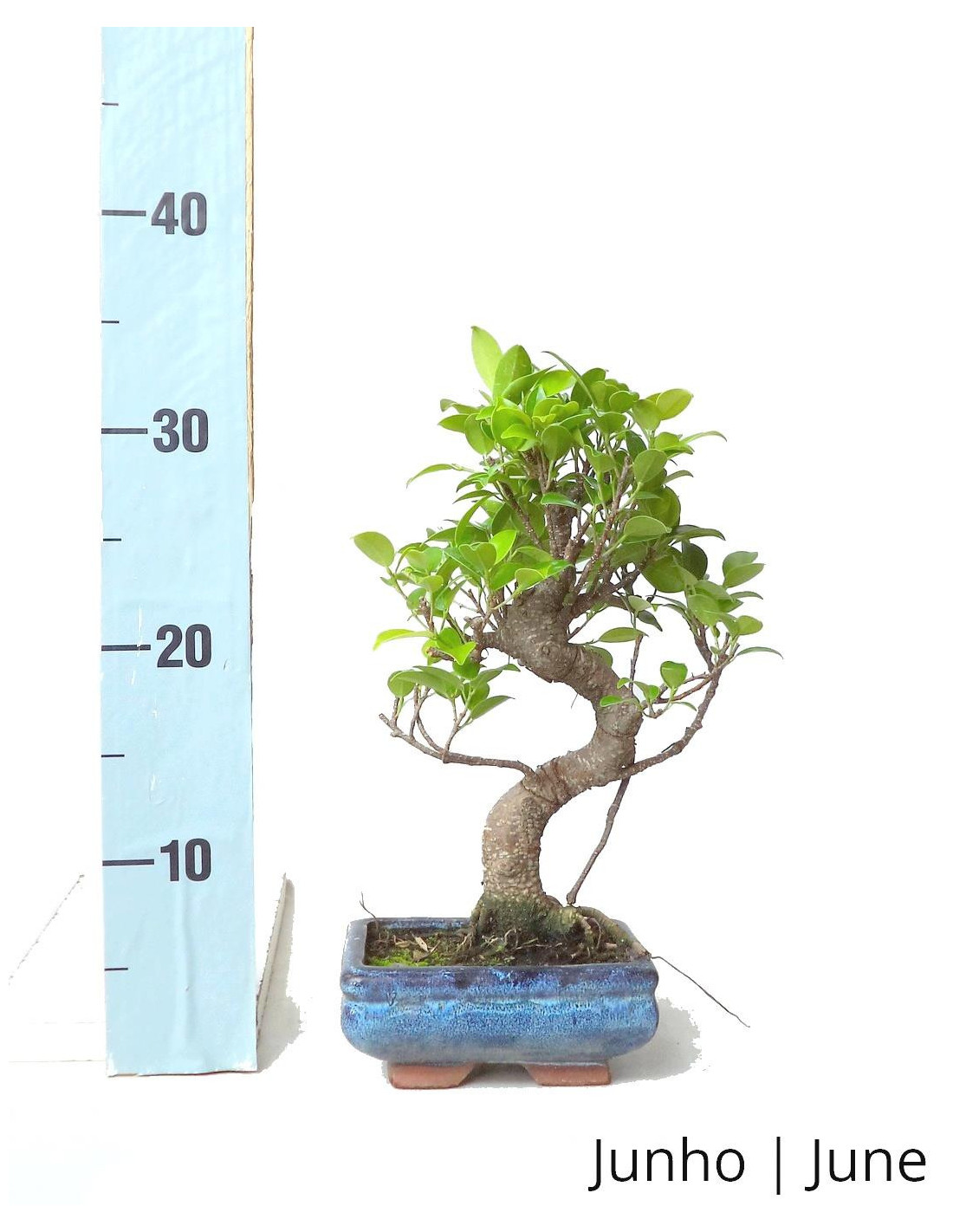
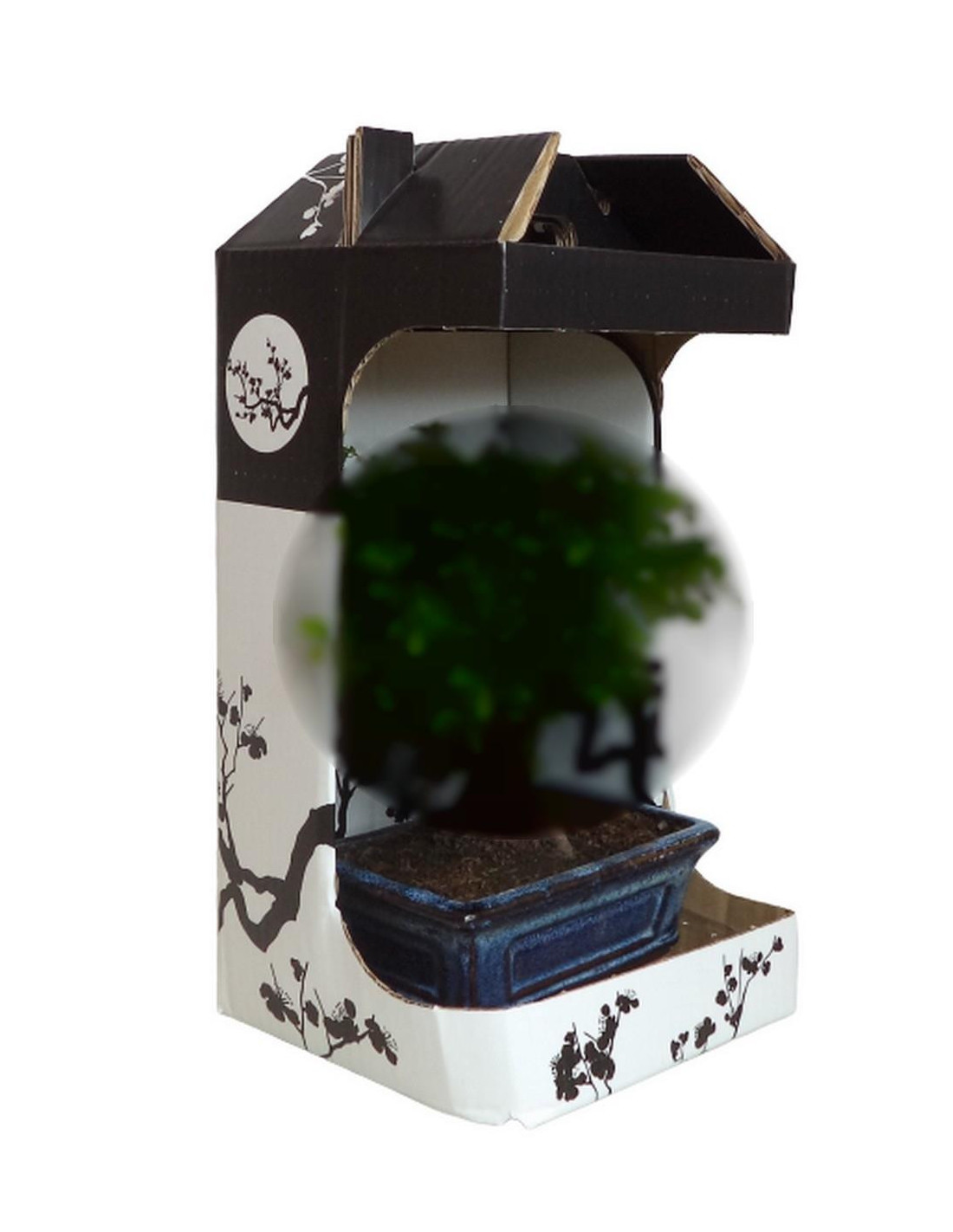
Common Name: Ficus
Scientific Name: Ficus Retusa (there are several species)
Characteristics: It belongs to the Moraceae family and is native to China and India.
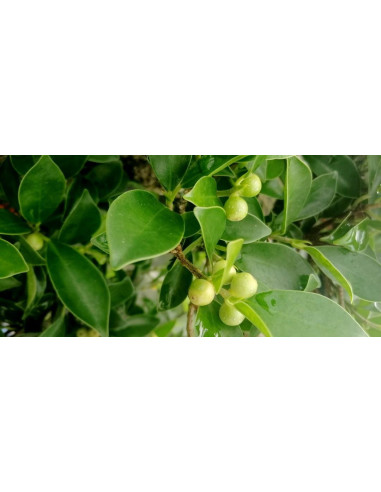
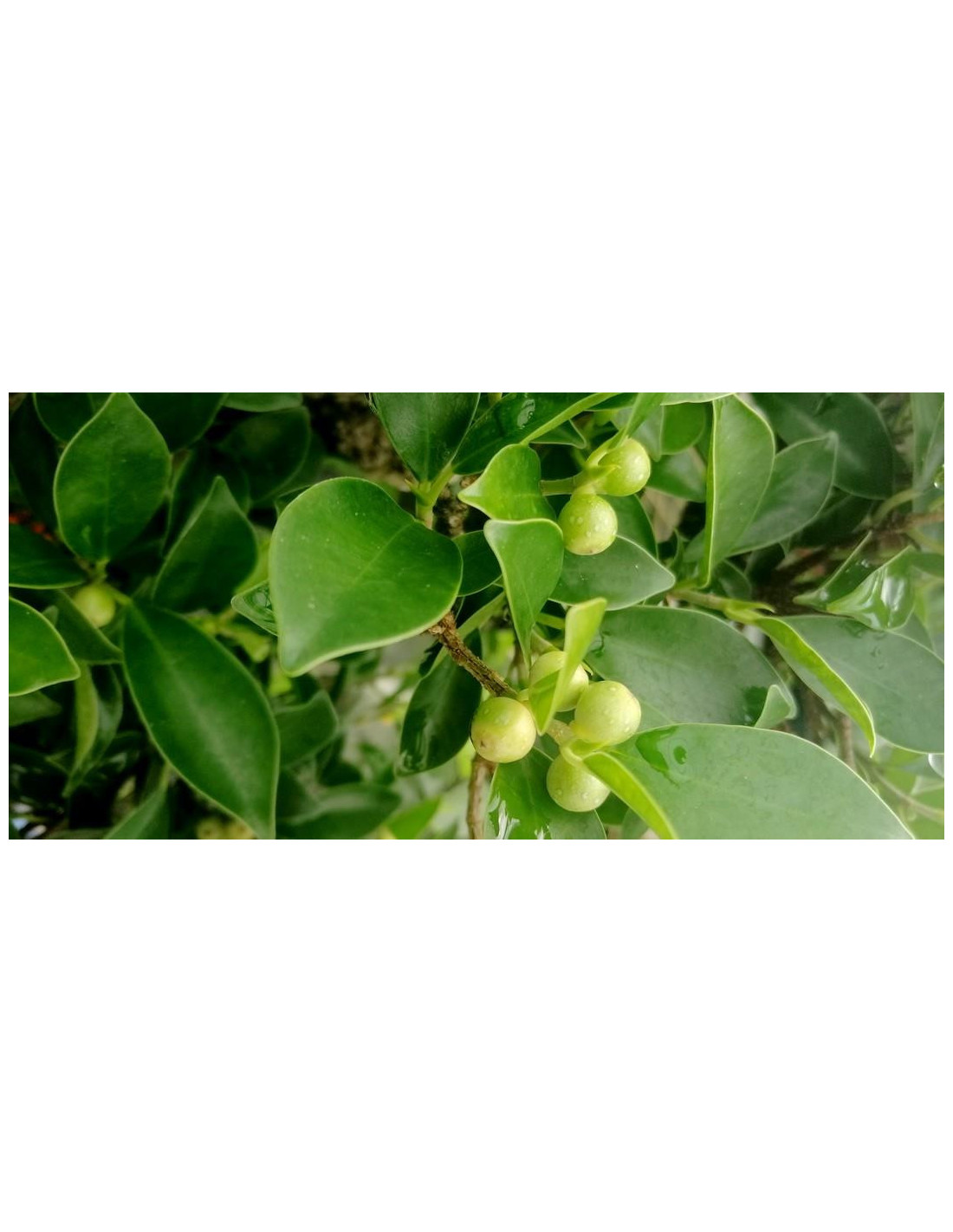
There are several species of Ficus cultivated as Bonsai, but the care is practically the same. All are evergreen and medium-sized.
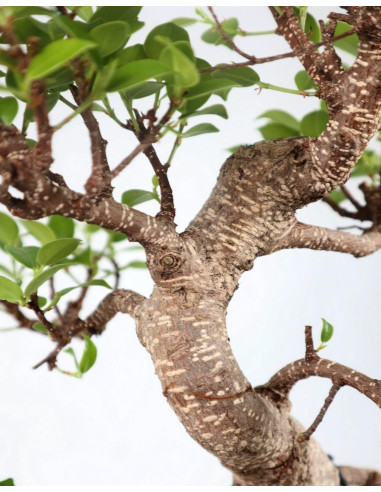
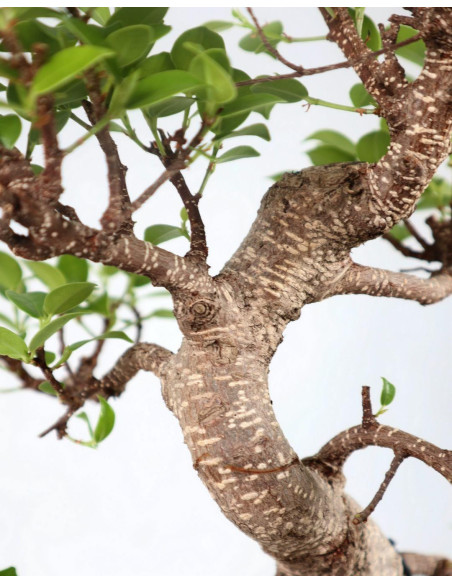
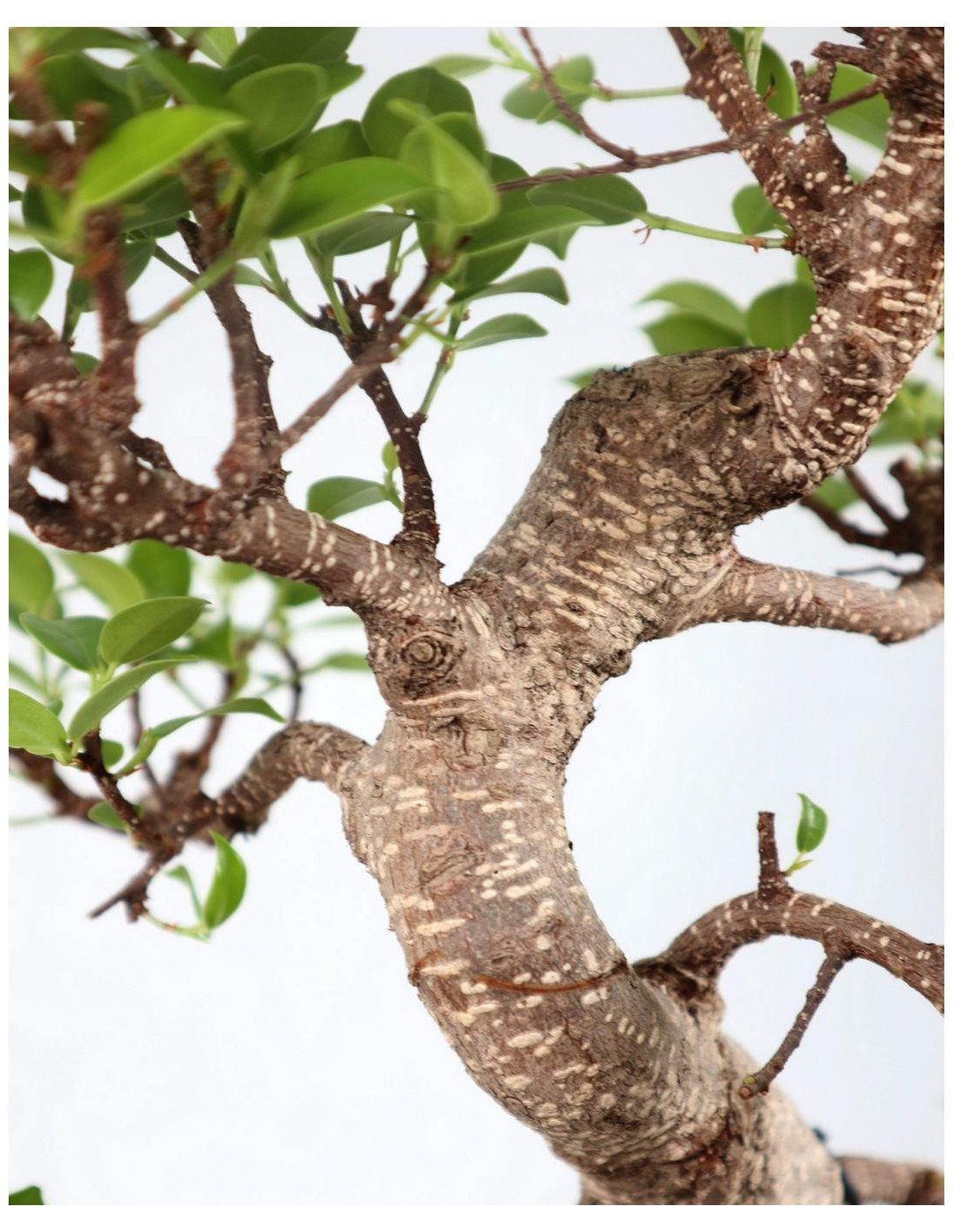
The aspect that most attracts Bonsai enthusiasts is the high resistance (it is common to say that "you need a course to kill a Ficus!") combined with the beauty of the bark and aerial roots it can produce.
Location: Indoors near a window (maximum distance 50 cm), without curtains or blinds, where it receives 2 to 3 hours of direct sunlight per day, rotated 180° weekly, away from heat sources or air conditioning. It can spend the warm months outside maintaining the 2 to 3 hours of direct sunlight.
Watering: Water the soil abundantly until a lot of water comes out of the drainage holes, to evenly moisten the soil, always from above never by immersion, using a watering can with fine holes.
Tips about watering, see the watering technical sheet.
Let the surface layer of the soil dry slightly between each watering (to check if the plant needs water, touch the soil with your fingers).
If you have a tray under the Bonsai, never leave any water in it (to prevent the roots from rotting).
There is no advantage in spraying the leaves; only do so on days when you fertilize and if the fertilizer is for foliar application, but ensure the leaves dry by night to avoid fungi.
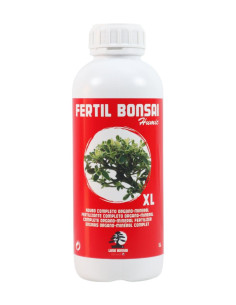
Nutrition: From February to October/November, with a basic plan composed of a complete fertilizer (Fertil Bonsai Humic, or Green & Gold Bonsai Organic or Biogold), and a biostimulant (Bio Bonsai Activ), which can also be combined with other products from our range.
Detailed information on how to combine these products with others from our range, or for a more specific nutrition plan, see the complete nutrition plan technical sheet.
Pruning: Given the large size of its leaves, it should always be controlled by "Metsumi" at the beginning of budding. When cut, it releases latex, which "stops" well by spraying the plant with water.
Tips about pruning, see the pruning and defoliation technical sheet.
Repotting: Using Broadleaf Bonsai Soil in May/June (deadline mid-July), after defoliation or heavy pruning.
Details about repotting, post-repotting, and specific fortifiers you can use see the repotting technical sheet.
Wiring: With defoliation in the warm months, June/July, it is a very resistant plant, supporting very strong work and always responding well, provided it is healthy.
Guidelines about wiring, see the wiring technical sheet.