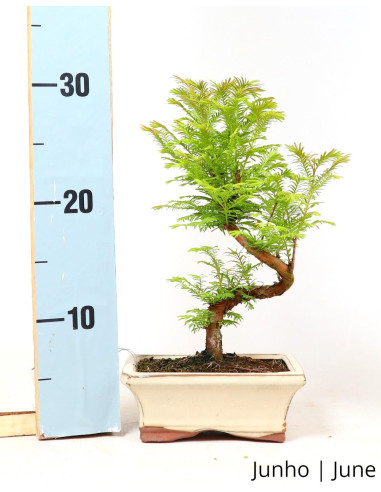
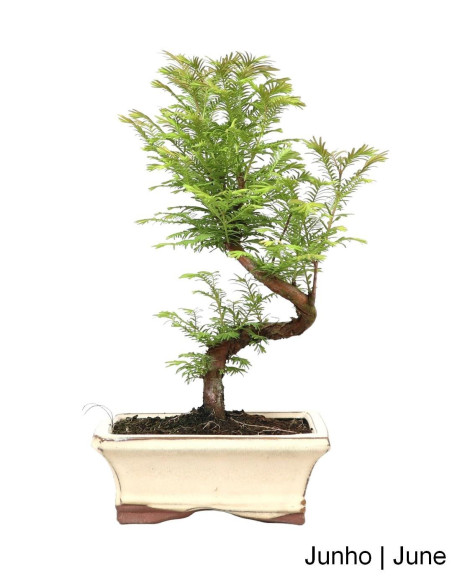
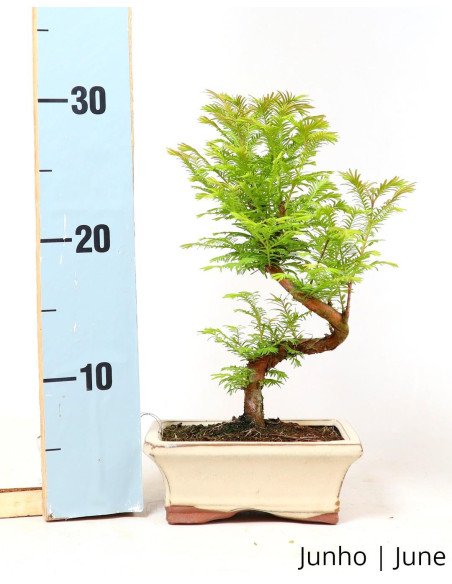
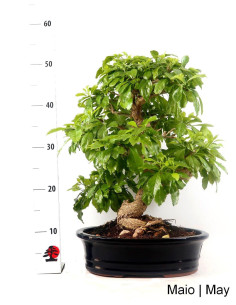
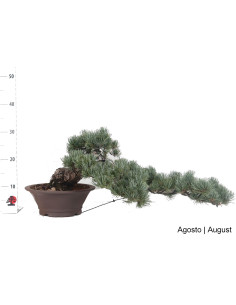
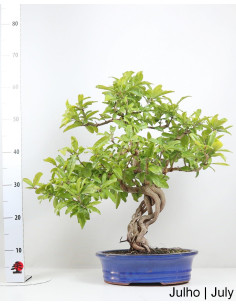
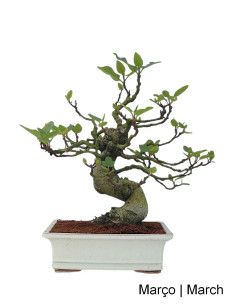
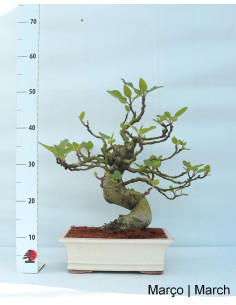
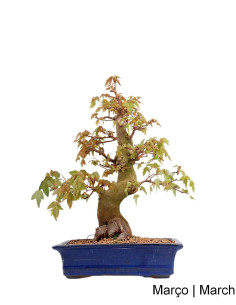
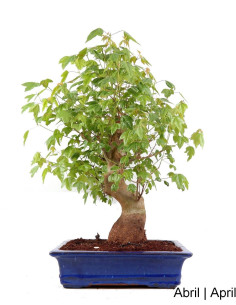
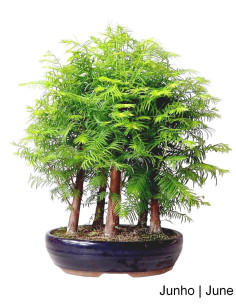
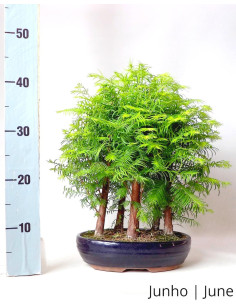
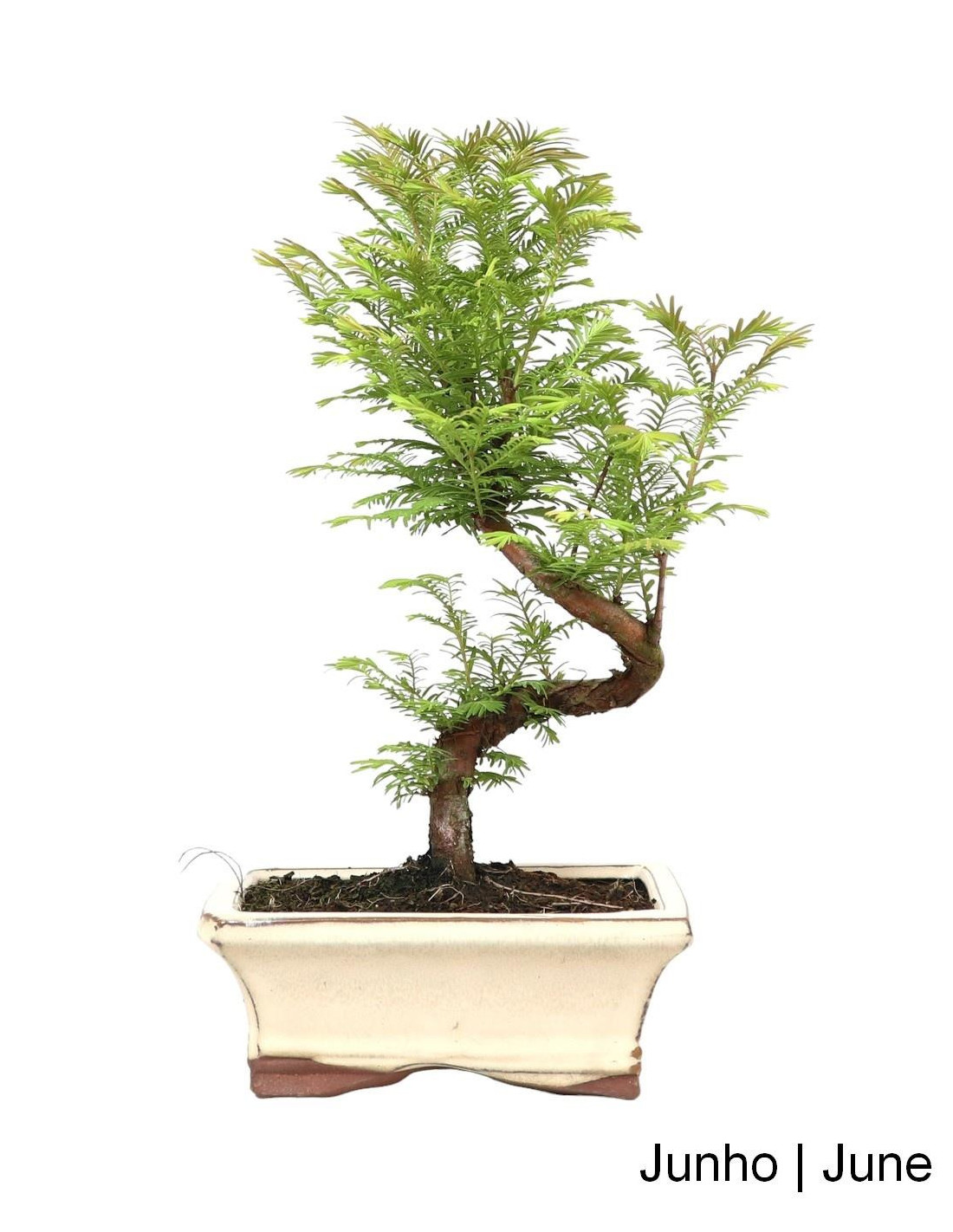
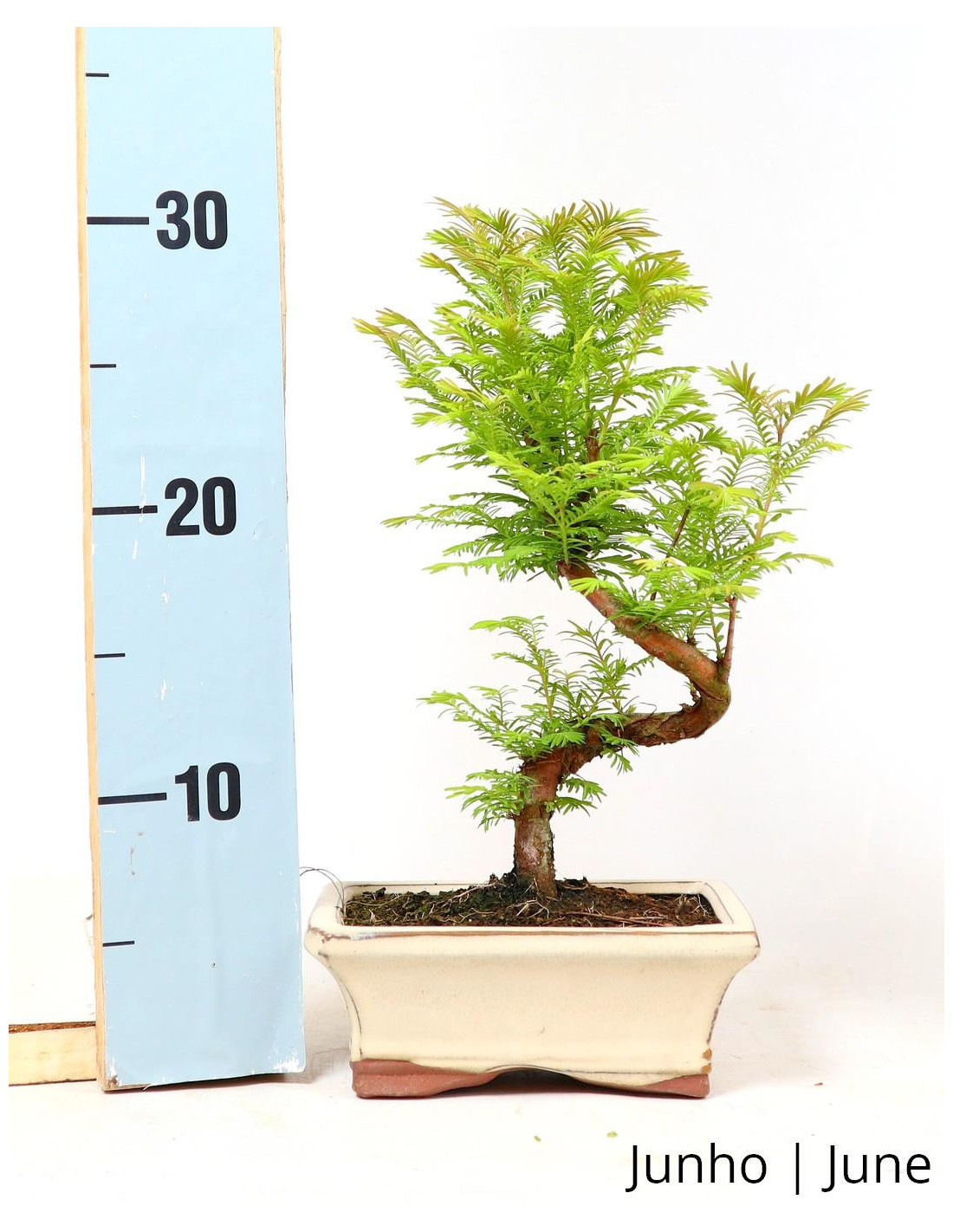
Common Name: Swamp Cypress or Bald Cypress (because it is a deciduous cypress)
Scientific Name: Metasequoia Glyptostroboides
Characterization: Belongs to the Cupressaceae family, with Metasequoia originating from China.
There is a "relative" called Taxodium, which originates from Southeast America. Both are "relatives" of the "giants" of the plant world, the Sequoias.
Large deciduous trees, easily reaching 40 meters in height, and 3 or more meters in diameter at the base of the trunk.
The bark is grayish in color and the leaves are compound, paired in Metasequoias and alternate in Taxodium.
In nature, they live in very swampy areas, often in swamps in Florida (hence one of the common names), so we must always be very careful with watering and their high water consumption.
Location: Outdoors where they get 2 to 3 hours of sun per day (ideally in the morning or late afternoon), protected from strong winds and frost.
To avoid the typical tip burn of the leaves due to dehydration in summer, we should protect them from the hours of strong sun, preferring eastern or western sun exposure.
Watering: Water the soil abundantly until plenty of water comes out of the drainage holes, to evenly moisten the soil, always from above and never by immersion, using a watering can with fine holes.
Tips about watering, see the watering technical sheet.
Let the top layer of soil dry out slightly between waterings, and in summer always keep the soil moist; when the leaves fall, start letting it dry a bit more between waterings (to confirm if the plant needs water, touch the soil with your fingers).
If you have a tray under the Bonsai, never leave any water in it (to prevent the roots from rotting).
There is no advantage to spraying the leaves; only do so on days you fertilize and if the fertilizer is for foliar application, but make sure the leaves are dry by night to avoid fungi.
Nutrition: From February to October, with a basic plan composed of a complete fertilizer (Fertil Bonsai Humic, or Green & Gold Bonsai Organic or Biogold), and a biostimulant (Bio Bonsai Activ), which can also be combined with other products from our range.
Detailed information on how to combine these products with the rest of our range, or for a more specific nutrition plan, see the complete nutrition plan technical sheet.
Pruning: Above a pair of leaves, restoring the shape; usually in the winter formation pruning, prune heavily going back to the "basics" because they have very vigorous growth, usually it's easy to maintain the shape by doing "Metsumi" with your fingers on the new shoots that grow.
Pruning tips, see the pruning and defoliation technical sheet.
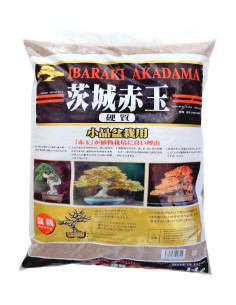
Transplant: In January/February before budding with Terra Bonsai Folhosas because although they are conifers, they need high moisture retention.
Details about transplanting, post-transplant care, and specific strengthening products you can use, see the transplant technical sheet.
Wiring: From late autumn to early spring, after the leaves fall; due to rapid growth and thickening of the trunk, be careful that the wires do not leave marks.
Wiring guidelines, see the wiring technical sheet.